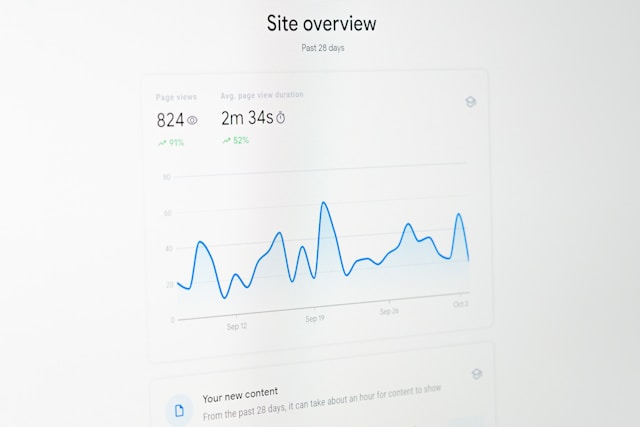
Stop Tracking Vanity Metrics
Total pageviews, social shares, and follower counts feel good to watch climb, but they rarely correlate directly with revenue. If the goal is making money — not just growing an audience — a smaller set of numbers deserves far more attention than the vanity dashboard most people default to.
Traffic Is Only the First Variable
Traffic matters, but only as an input into a larger equation. Doubling your traffic without touching anything else downstream will double your revenue only if every other part of your funnel is already working. In practice, that’s rarely the case — which is why traffic alone is an incomplete goal.
Conversion Rate Is Where Most Sites Leak
Conversion rate — the percentage of visitors who take the action you actually want, whether that’s a purchase, a signup, or a click — is where most sites quietly lose the most potential revenue. A confusing call-to-action, a slow checkout, or an unclear offer can cut conversions in half without a single visitor noticing anything is wrong.
Revenue Per Visitor Ties It All Together
Multiplying traffic by conversion rate gives you revenue per visitor — a single number that reflects the actual health of your monetization, independent of how much traffic you have. Tracking this number over time reveals whether your funnel is improving or quietly decaying, something total revenue alone can hide if traffic is also growing.
Fix the Leak Before You Chase More Volume
Doubling conversion rate is often far easier than doubling traffic — it might mean rewriting a headline, simplifying a form, or clarifying a price. Yet most site owners default to chasing more visitors instead of fixing what’s already broken in their funnel, largely because traffic growth feels more visible and exciting.
The Takeaway
Revenue per visitor is the metric that actually reflects whether a site is monetizing well. Before investing more time or money into traffic acquisition, it’s worth confirming the visitors you already have aren’t leaking out through a funnel that was never actually fixed.